
Installing the Screen Is Not Enough: How to Make Digital Signage Deliver Real Results
Many organisations install digital signage and stop there. Real results come from clear goals, a content plan, the right placement, measurement and ongoing care.
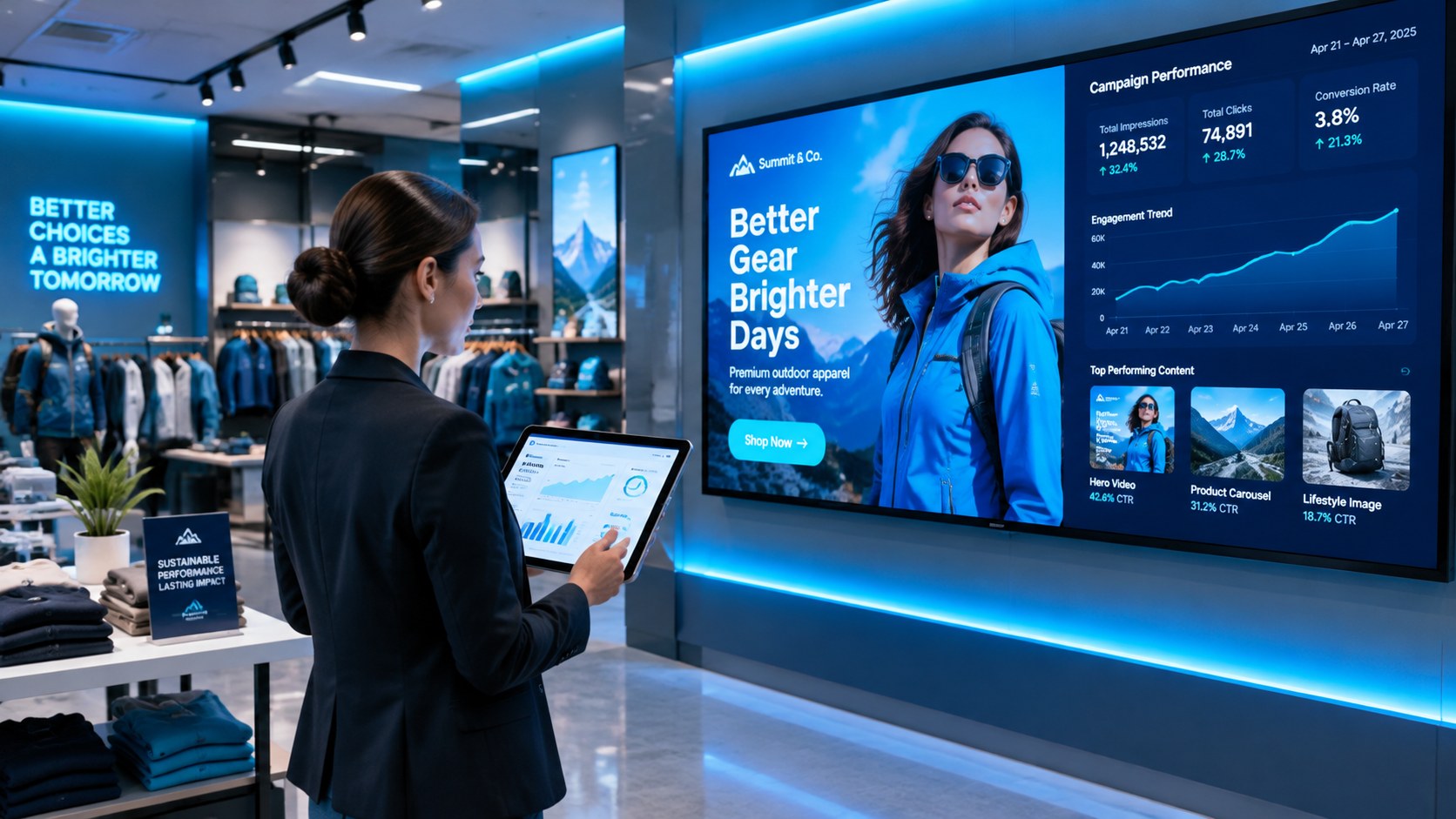
Many organisations invest in digital signage, finish the installation and consider the project complete. A few months later, the screens still show the same launch-day content, nobody checks whether they are even on, and the investment quietly turns into expensive wall decoration.
The truth is that installation is only the starting point. A screen is a communication channel, and like every channel, it produces results only when it has a clear goal, fresh content, the right audience and someone who measures and improves it. This article walks through the five things that separate a screen that merely glows from a system that genuinely works for the business.
1. Start with a Goal You Can Measure
Before thinking about content, answer one question: what should change because this screen exists? A goal that is too vague, such as “making the store look modern”, cannot be measured and cannot be improved. A good goal names a number and a timeframe.
Retail: increase sales of promoted items, or lift the average bill during campaign periods.
Restaurants: raise orders of high-margin menu items, or reduce perceived waiting time at the counter.
Hospitals and service centres: reduce repeated questions at the counter and help visitors find the right service point.
Offices and factories: make sure important announcements actually reach staff, measured by surveys or acknowledgement rates.
Write the goal down and share it with everyone involved. When the team knows what success looks like, every later decision — content, placement, scheduling — becomes easier to judge.
2. Content Is the Engine, Not an Afterthought
The most common reason digital signage fails is not the hardware. It is that nobody owns the content. A screen showing last quarter's promotion tells customers that nobody is looking after the store.
Assign an owner: name the person or team responsible for updating content, and give them the time and access to do it.
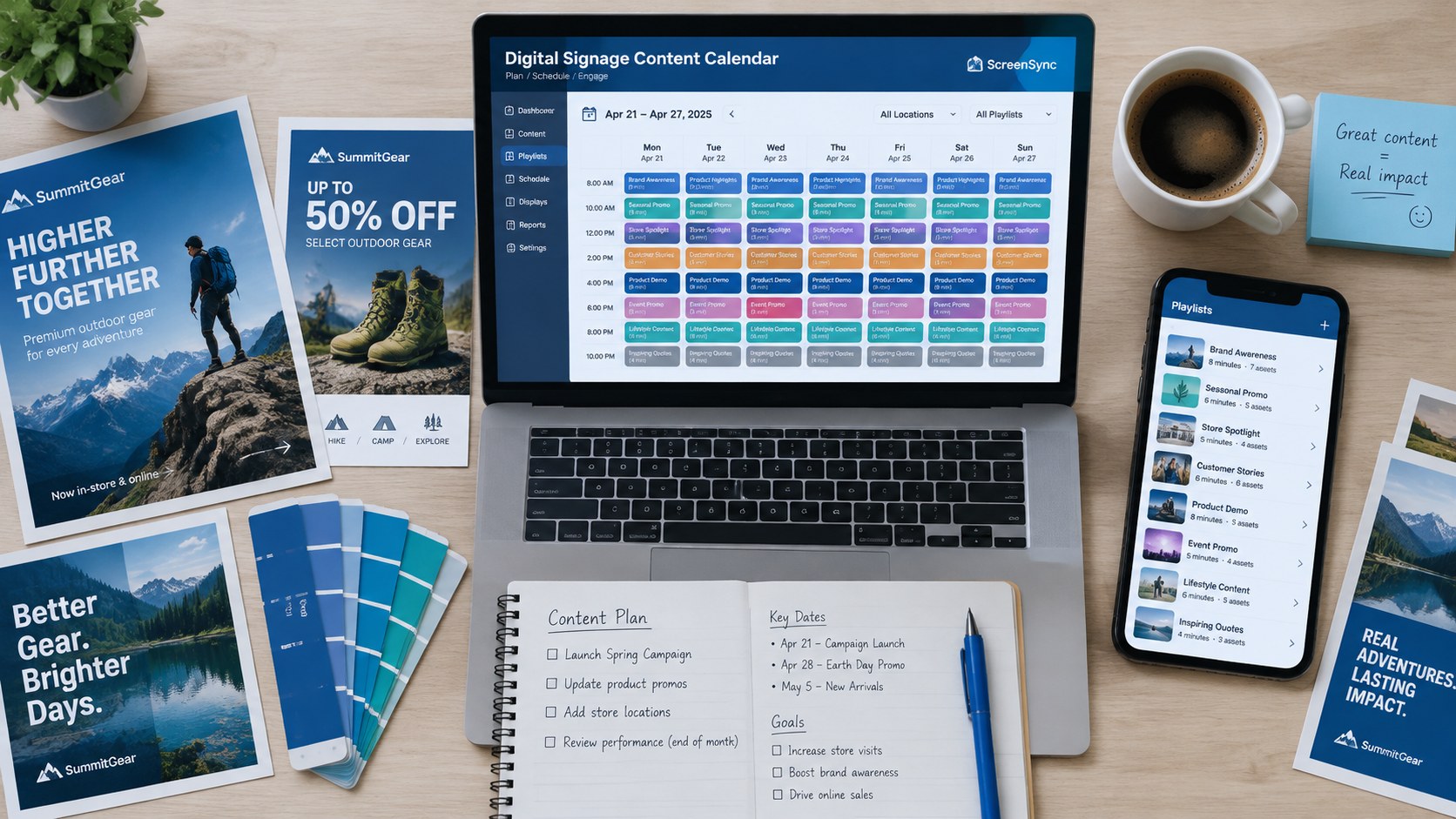
Plan a refresh cycle: decide how often content changes — weekly promotions, monthly campaigns, seasonal themes — and prepare material ahead of time.
Design for glances, not stares: most viewers look at a screen for a few seconds. One message per slide, large text, strong contrast and a clear call to action work better than crowded layouts.
Match the loop to the dwell time: a queue area where people wait five minutes can carry longer content than a corridor people walk past in three seconds.
3. Right Screen, Right Place, Right Time
Even excellent content fails when the screen sits in the wrong spot or plays at the wrong moment. Walk the space as a customer would and check what people actually see from where they actually stand.
Placement: position screens at natural decision points — entrances, queue areas, counters, lifts — at eye level and free of glare and obstructions.
Scheduling: use dayparting so breakfast promotions run in the morning, lunch sets at midday and after-work offers in the evening. A modern CMS makes this automatic.
Relevance by location: each branch or zone can carry content suited to its own audience, while head office keeps brand-level messages consistent.
4. Measure, Compare, Improve
What gets measured gets improved. Digital signage offers more measurement options than most teams use, and even simple methods reveal whether the system is earning its keep.
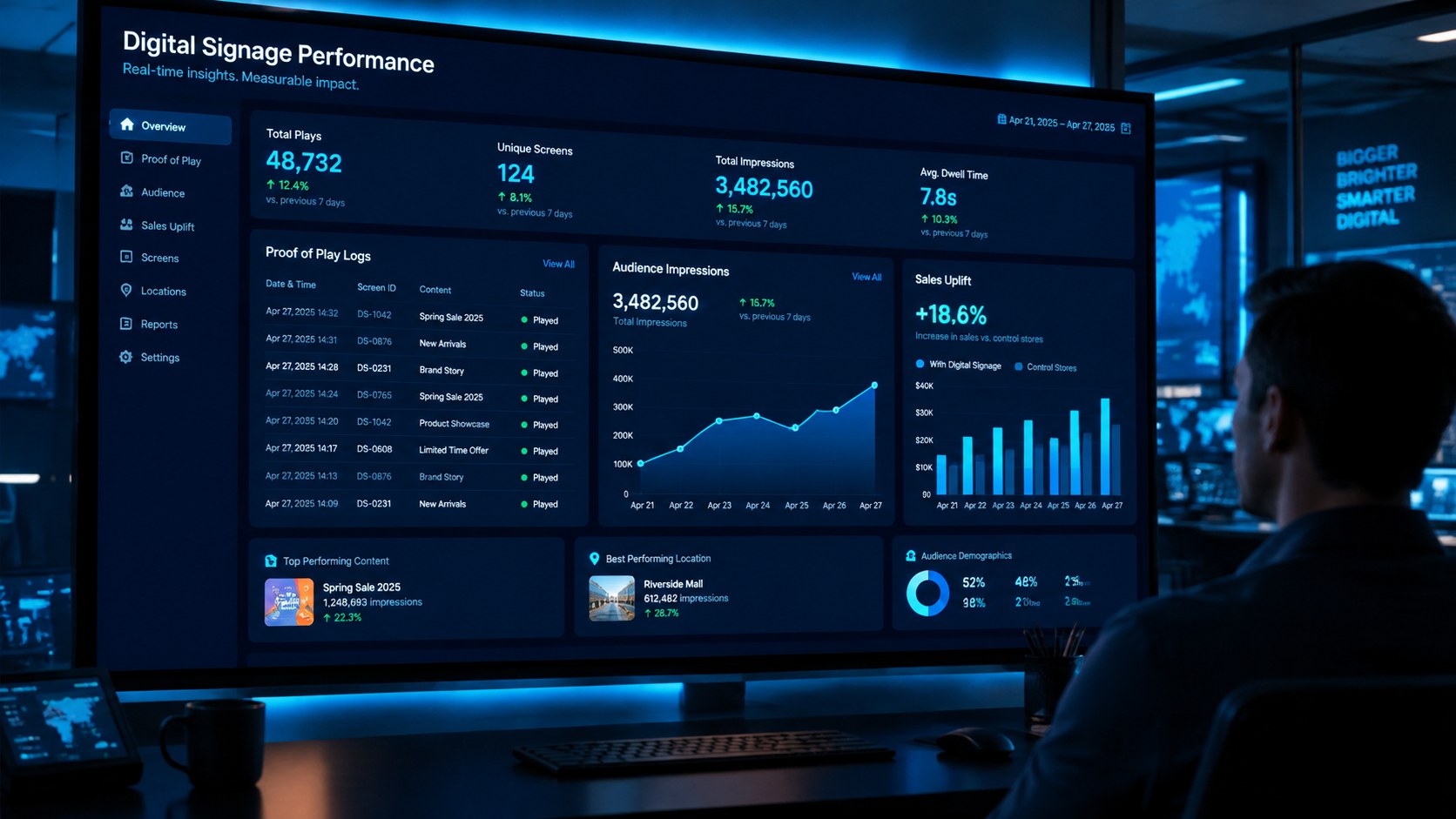
Proof of play: confirm that content actually played as scheduled, on every screen, before judging its effect.
Sales comparison: compare sales of promoted items before and during campaigns, or between branches with and without signage.
Simple experiments: run two versions of a message in different weeks or different branches and keep the one that performs better.
Review rhythm: set a monthly review to look at the numbers, retire weak content and plan the next cycle.
5. Keep the System Healthy
A dark or frozen screen damages trust faster than having no screen at all. Reliability is part of the result, so plan for it from the start.
Remote monitoring: use a CMS that alerts the team when a screen or player goes offline, so problems are fixed before customers notice.
Preventive maintenance: schedule cleaning, ventilation checks and firmware updates instead of waiting for failures.
Spare parts and support: agree with your supplier on spare-unit availability and response times, especially for screens that are critical to daily operations.
A Practical 90-Day Starting Plan
If your screens are already installed but results are unclear, this simple plan gets the system working within one quarter:
Days 1–14: define one measurable goal per location, appoint a content owner and audit what is currently on every screen.
Days 15–45: build a four-week content calendar, set up scheduling and switch on monitoring alerts.
Days 46–90: start measuring — proof of play plus one business metric — and hold the first monthly review to decide what to change.
Conclusion: The Screen Is the Beginning, Not the End
Digital signage delivers real results when it is treated as an ongoing communication programme, not a one-off installation. Clear goals, owned and refreshed content, thoughtful placement, honest measurement and reliable hardware turn a screen on the wall into a channel that pays for itself.
Related reading: Digital Signage That Grows with Your Organisation
Already have screens installed but not seeing results? Send photos of your locations and your current content to the STEP Solutions team via LINE. We can help review the system and suggest a practical improvement plan.
Talk to our experts
Interested in this solution for your organisation?
The Step Solutions team is ready to survey, design, manufacture, install and maintain a system tailored to your space and goals.
Related Articles
Interactive Display
Smart Classroom: Buying Only a Display vs a Complete System — What Is the Difference?
November 2026
Interactive Display
Buying an Interactive Display: How to Check the Model Code and Android Version
November 2026
Digital Signage
Cheap Signage Players May Carry Hidden Risk Costs
November 2026