
What are the advantages and limitations before choosing solar energy?
Renewable energy is a growing trend today because it not only helps make our planet safer but also saves us costs associated with finite resources like oil and coal. Solar Energy
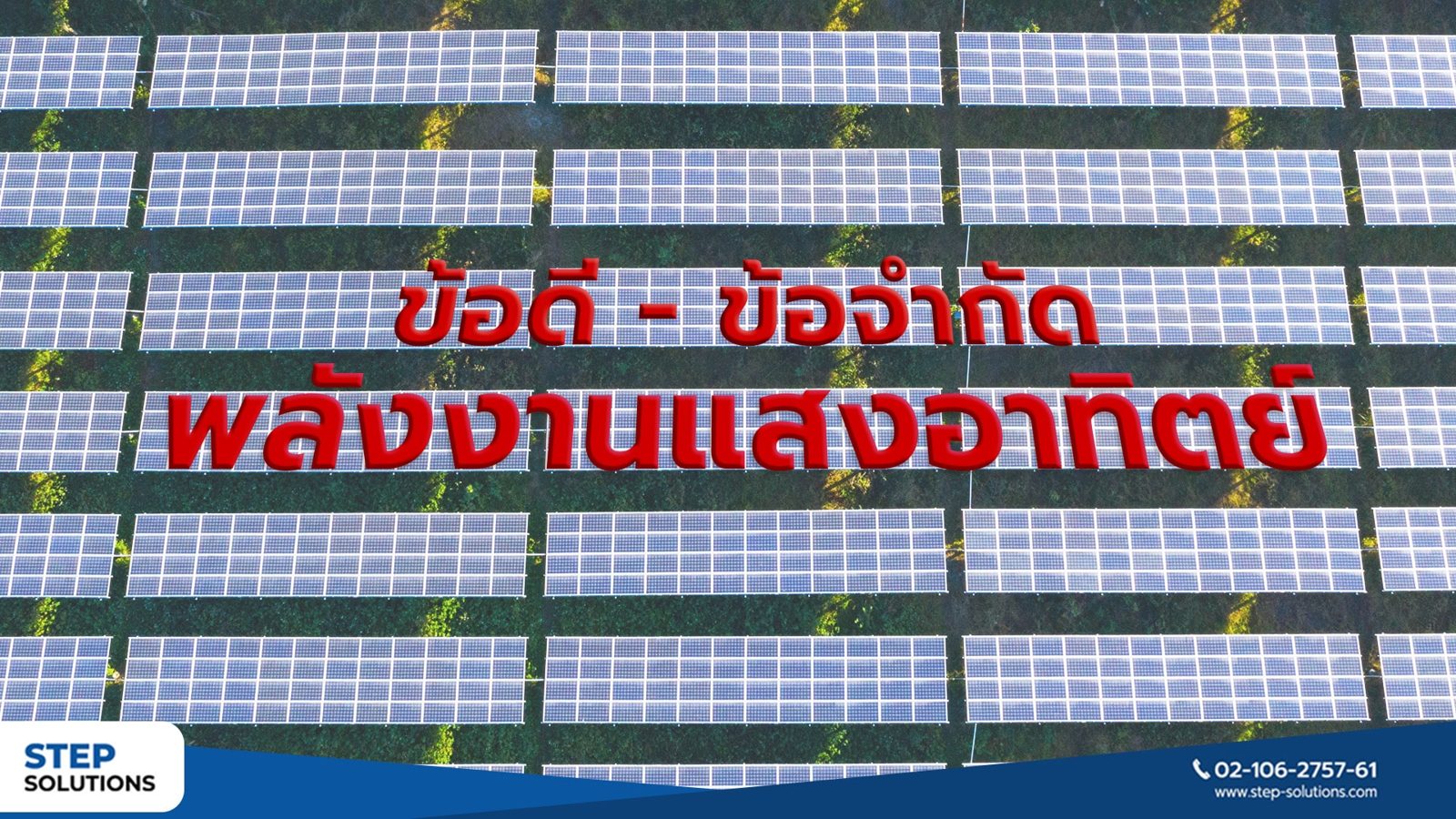
Renewable energy is currently driving global power because it not only helps make our planet safer but also reduces costs. It also serves as a replacement for finite resources such as oil and coal. Solar energy is one of the most efficient renewable energy sources. STEP SOLUTIONS Co., Ltd.
has compiled the advantages and limitations of using solar energy for your information. Let's explore what the pros and cons of solar energy are. Advantages: • Reduces global warming. The primary advantage identified by STEP SOLUTIONS is arguably the most evident: solar energy helps reduce global warming, which is largely caused by the combustion of petroleum energy.
The combustion of petroleum energy releases carbon dioxide. Frankly, petroleum energy is currently used worldwide, and the only thing that can transform carbon dioxide into something harmless to the world is trees. However, trees are being destroyed, as we see in various media, such as logging for home decoration or illegal timber trade.
Therefore, utilizing solar energy, which directly harnesses power from the sun, is a clean energy source that does not produce harmful carbon dioxide, effectively mitigating global warming. • Low Maintenance Costs: Solar panels have a lifespan of up to 25 years, resulting in relatively low maintenance expenses. • Reduces Organizational Costs: Solar energy helps organizations reduce their electricity expenditures.
Energy storage through absorption within solar panels is akin to a battery that stores sunlight. The solar energy converted into electricity can be stored for use during the night, making it suitable for organizations that require power at night to save costs. Limitations: • Inconsistent Output: Daily electricity generation depends on the amount of sunlight at that particular time.
Consequently, when using stored energy at night, the power output might not always be sufficient to last until the morning of the next day. • Requires Significant Installation Space: To generate electricity, one solar panel requires an area of 8-10 sq.m. / 1 kilowatt. Furthermore, solar energy requires a high density of sunlight in the area where the sun shines.
For solar cells to charge optimally and supply sufficient electricity, panels must be installed in continuous rows, which leads to substantial space consumption. • Electricity Output Varies with Weather: On days with less sunlight, the absorbed energy will be lower. If the power generation is low, it will affect the electricity supply from stored energy, potentially making it insufficient for demand.
These are the advantages and limitations of solar energy that STEP SOLUTIONS has shared with those considering installing solar panels for their homes or businesses. We hope this blog helps in your decision-making process.
Talk to our experts
Interested in this solution for your organisation?
The Step Solutions team is ready to survey, design, manufacture, install and maintain a system tailored to your space and goals.